Why and how to innovate in the field of cable-driven parallel robots?
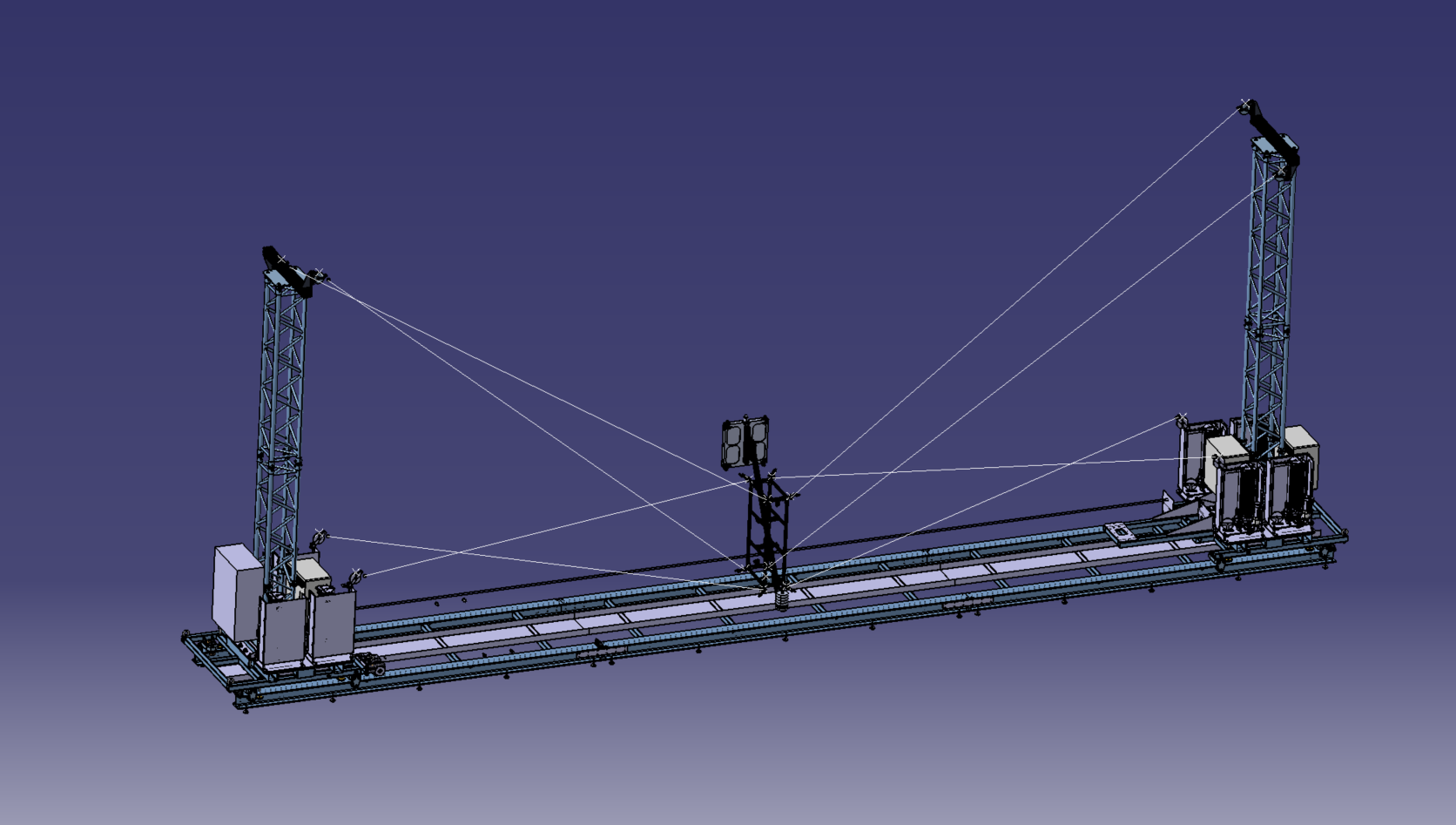
Cable-driven parallel robots (CDPRs) are systems consisting of a mobile platform driven by a system of cables and motors. The most common example can be seen in football or rugby stadiums, where cameras flying over the pitch are actuated by CDPRs. “We have been working on CDPRs for about fifteen years, and we have acquired significant experience in the design and control of these robots,” introduces Stéphane Caro, CNRS Research Director at the Digital Sciences Laboratory of Nantes (LS2N) and coordinator of the Titanbot project. “One might ask: where is the innovation, given that CDPRs already exist?” he continues. “It lies in their application to industrial sectors, which require better control of the behavior of this type of robot as well as higher accuracy.”
Yet, CDPRs offer numerous advantages for industrial use. They are mechanically simple, capable of moving heavy payloads, and able to cover large workspaces. They can be operated by an on-site technician, controlled remotely, or operated autonomously. The objective of the Titanbot project is to leverage these assets to propose, based on two industrial use cases, robots that are safe, easy to deploy, and straightforward to operate—even for personnel with no prior robotics experience.
In 2023, the researcher assembled a consortium bringing together six partners around the CNRS (via the LS2N and LIRMM laboratories). The participants cover the entire production and value chain: end users (VINCI Energies and ORANO DS), technology assessment bodies (IRT Jules Verne and CETIM), and the systems integrator ACTEMIUM Paris Process Solutions. The project Titanbot, Cable-Driven Parallel Robots for Construction, Nuclear, and Logistics, was selected under the 2023 “Robotics Transfer” Challenge call for projects, operated by the French National Research Agency (ANR) as part of France 2030.
Construction and nuclear: CDPRs in action
The Titanbot project focuses on two use cases: materials handling on construction sites for VINCI Energies, and the radiological inspection of nuclear sites undergoing decommissioning for Orano DS.
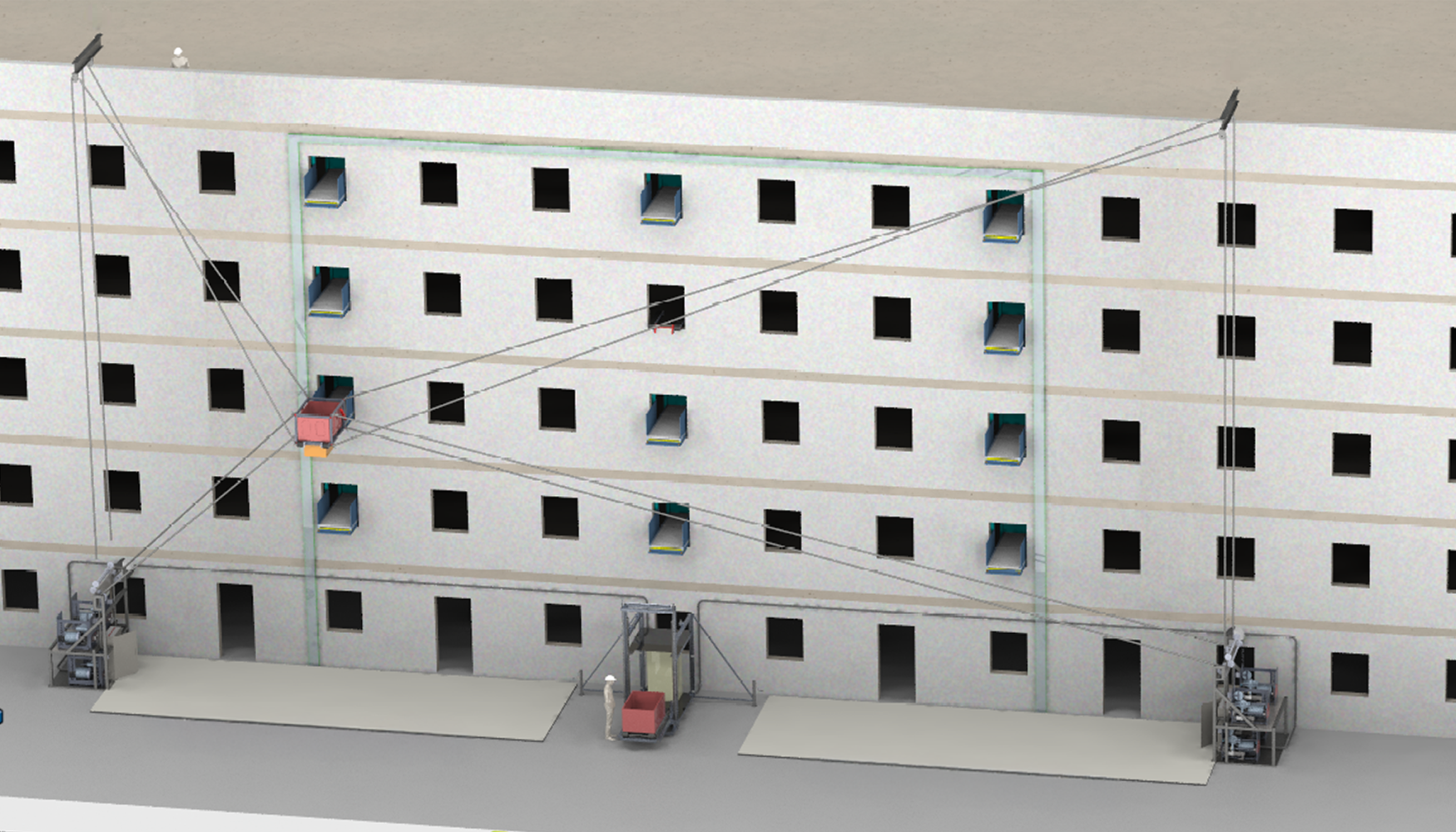
The CDPR developed to meet VINCI Energies' requirements must be capable of moving payloads up to 50 kg at a speed of 0.5 m/s along a building facade (initially covering a 20 m × 15 m workspace, with a long-term target of 40 m × 30 m). “Today on construction sites, loads are moved either manually or by hoists and machinery that only operate in one or two dimensions,” notes Christian Roda, Division Safety Officer at VINCI Energies France Tertiaire Centre-Est Sud. A robot capable of loading and unloading across three axes would reduce manual handling, which contributes to accidents and musculoskeletal disorders. “This topic is close to our hearts because it aims largely to alleviate the physical strain on our workers,” adds Roda, who began his career on the operational side.
Orano DS, having previously collaborated with IRT Jules Verne, proposed exploring a robotic radiological inspection solution for decommissioning operations. When a nuclear facility is dismantled, verification of the absence of residual contamination must be performed on surfaces; delegating these measurements to robots would reduce both operational hazards for personnel and intervention costs.
To achieve this, the teams adapted an existing demonstrator at IRT Jules Verne, targeting a sensor positioning accuracy of 4 cm ± 1 cm across 10 m × 5 m surfaces, ultimately expandable to 20 m × 10 m.
“We decided to focus on this use case to maintain consistency within the project, but other needs exist across our decommissioning sites: for example, one could envision a CDPR deploying a robot into a hot cell to carry out remote operations,” indicates Jean-François Thro, R&D Technical Manager at Orano DS.

© ACTEMIUM Paris Process Solutions
Complementary expertise to advance CDPRs toward industrial maturity
Funded by the ANR with 4 million euros over a 30-month period, Phase 1 of the project focuses on evaluating and maturing research results. This is measured using Technology Readiness Levels (TRL), on a scale from 1 (basic principles observed) to 9 (actual system proven in an operational environment). “The goal is to progress from TRL 3–4 at the start of Phase 1 to TRL 6–7 by its completion,” explains Stéphane Caro.
The evaluation criteria are multifactorial, addressing both techno-economic performance and human factors (acceptability, ease of use, etc.) through methodologies derived from the Humanities and Social Sciences.
Phase 2 will be dedicated to the industrialization of the prototypes (Phase 1) and the integration of new use cases for CDPRs. This is why the involvement of technology integrator ACTEMIUM Paris Process Solutions is decisive. The objective for VINCI Energies and Orano DS is to be able to turn to a partner capable of supplying robots that meet their technical specifications for applications similar to or distinct from the use cases addressed in the Titanbot project. Currently, there are no regulatory standards governing the commercialization of such robots. CETIM (Technical Centre for Mechanical Industry) is participating in this project to conduct targeted studies on this matter and contribute to improving safety for CDPR operators.
“Titanbot has been an outstanding opportunity to build a solid project alongside VINCI Energies, Orano DS, and ACTEMIUM Paris Process Solutions. In the long run, the team will naturally explore a broader spectrum of applications for cable-driven parallel robots,” concludes Stéphane Caro.
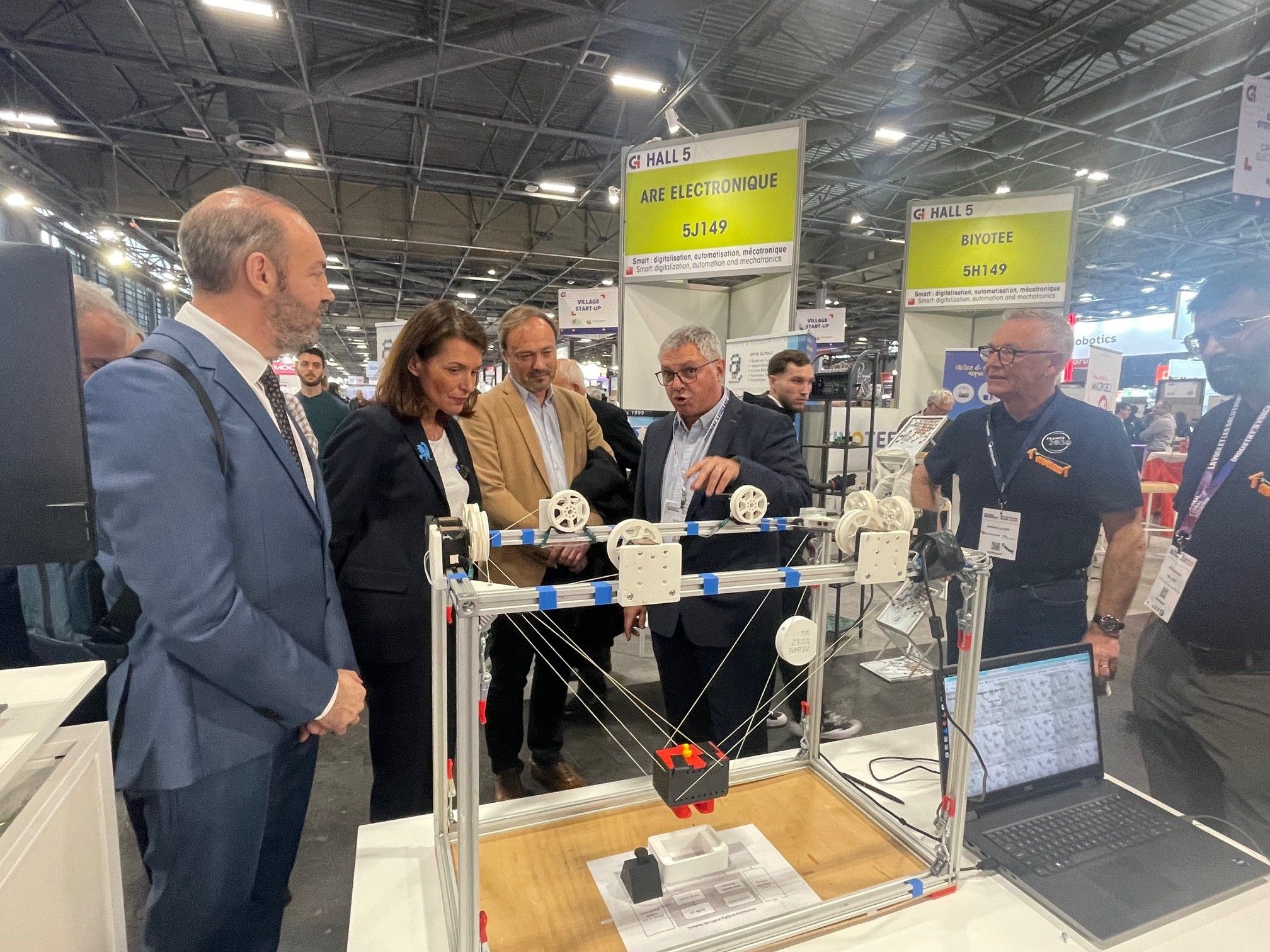
TITANBOT presented its research at Global Industrie 2026, a major event for industrial innovation.
TITANBOT presented its research at Global Industrie 2026, a major event for industrial innovation.
https://www.global-industrie.com/produit/UHJvZHVjdF8xNDMyODg5
Source: https://www.cnrs.fr/