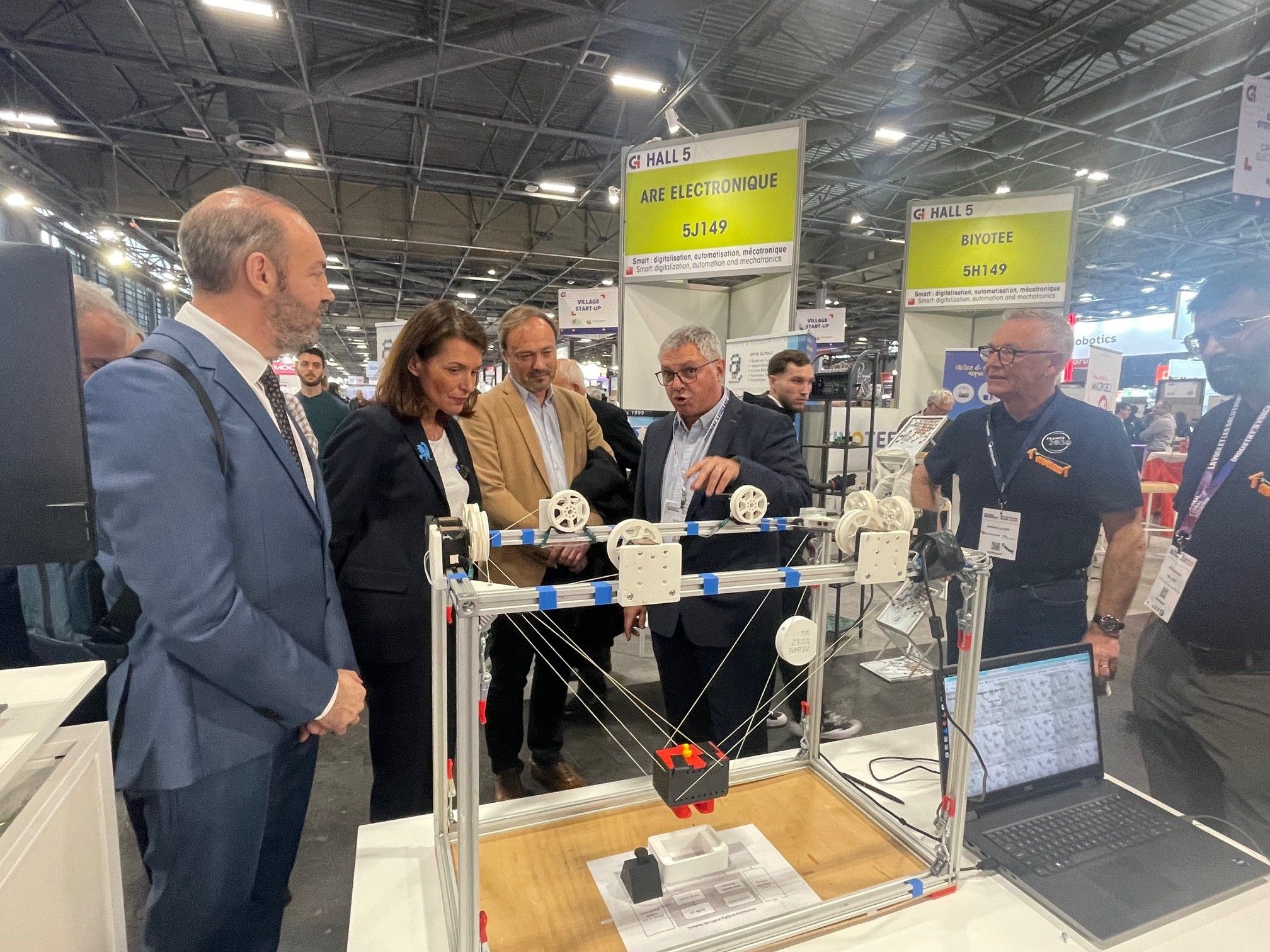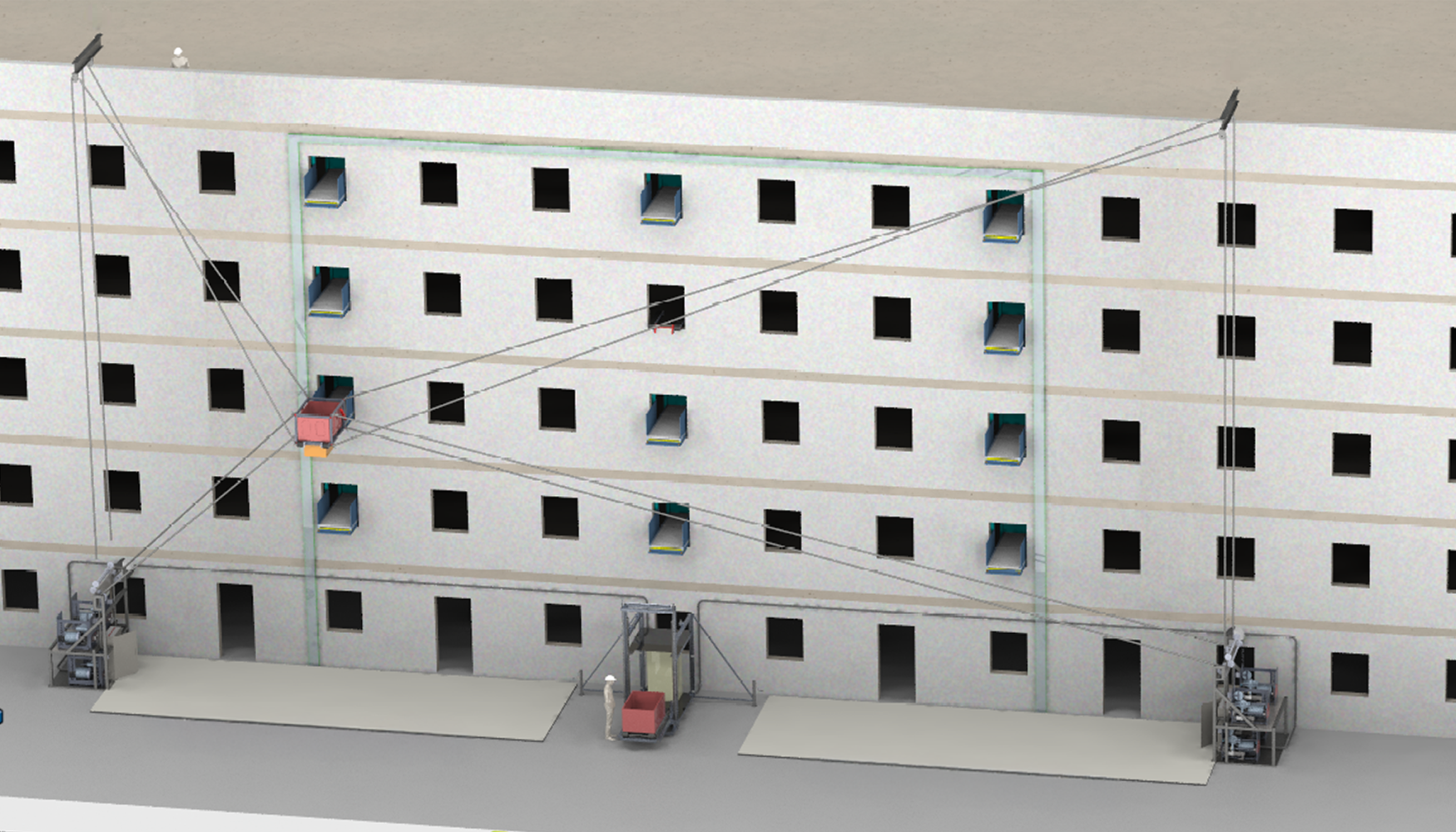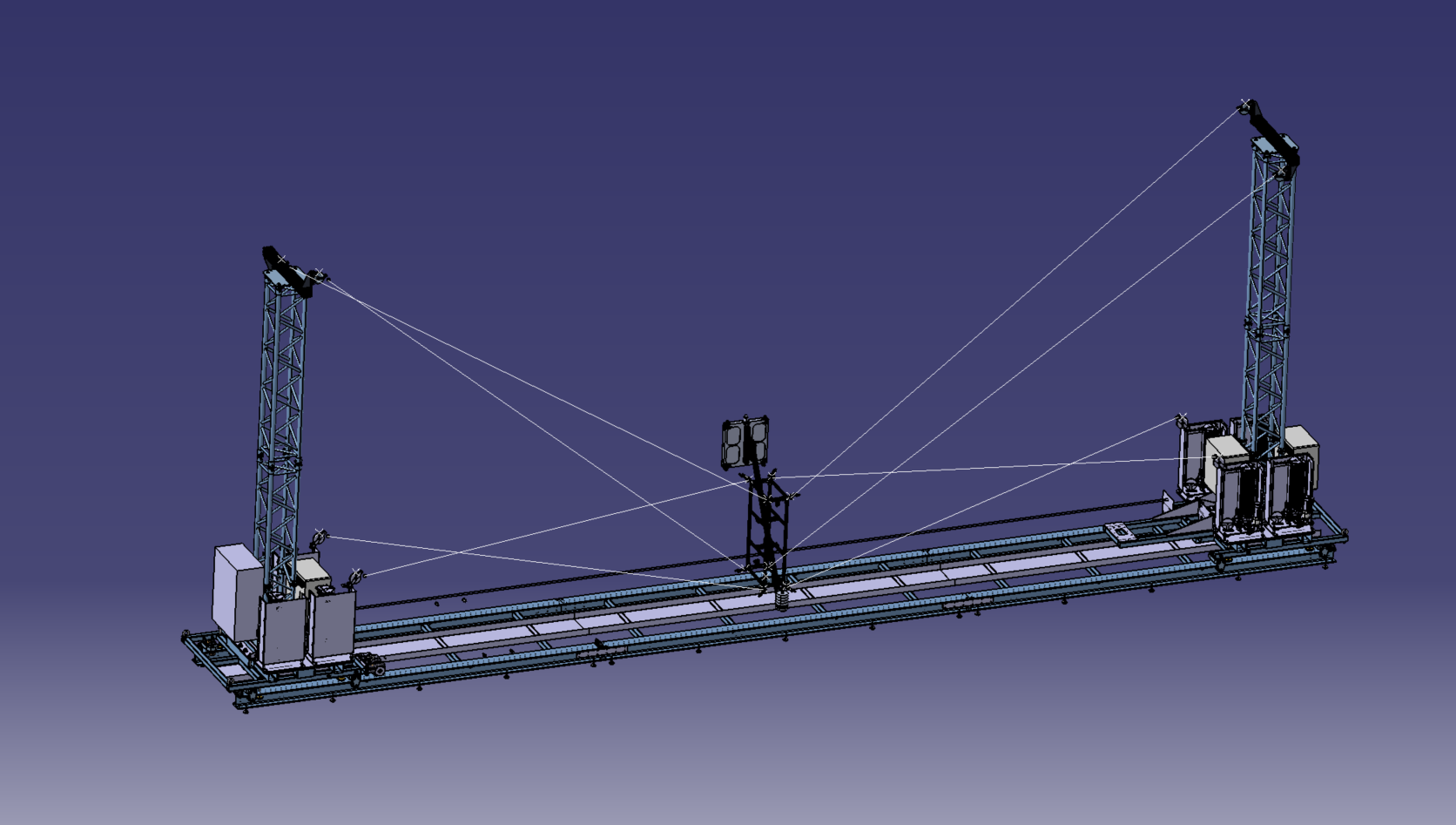
Transporting heavy loads over long distances in three dimensions and across high elevations. Cable-driven parallel robots will be tested in the construction industry and in the decommissioning of nuclear facilities.
Any sports enthusiast is familiar with the aerial cable cameras (cablecams) that glide above stadiums to deliver close-up footage of the action. These are the most well-known implementations of the discrete family of cable-driven parallel robots (CDPRs). In the future, these robotic systems, capable of conveying heavy payloads over extensive workspaces, may well make their breakthrough in the industrial sector.
This is the objective of Titanbot, winner of the Robotics Transfer call for projects under the France 2030 framework. The project is led by the Nantes Digital Sciences Laboratory (LS2N), in partnership with LIRMM in Montpellier and the Jules Verne Technological Research Institute (IRT Jules-Verne) in Nantes. "We have been investigating cable-driven parallel robots for fifteen years. The technology is now mature enough to begin industrial transfer," explains Stéphane Caro, CNRS Research Director at LS2N. While CDPR technology has previously been deployed to clear contaminated debris at the Chernobyl power plant, its adoption remains largely limited outside broadcast and audiovisual applications.
Source: https://www.lesechos.fr/